What it is like
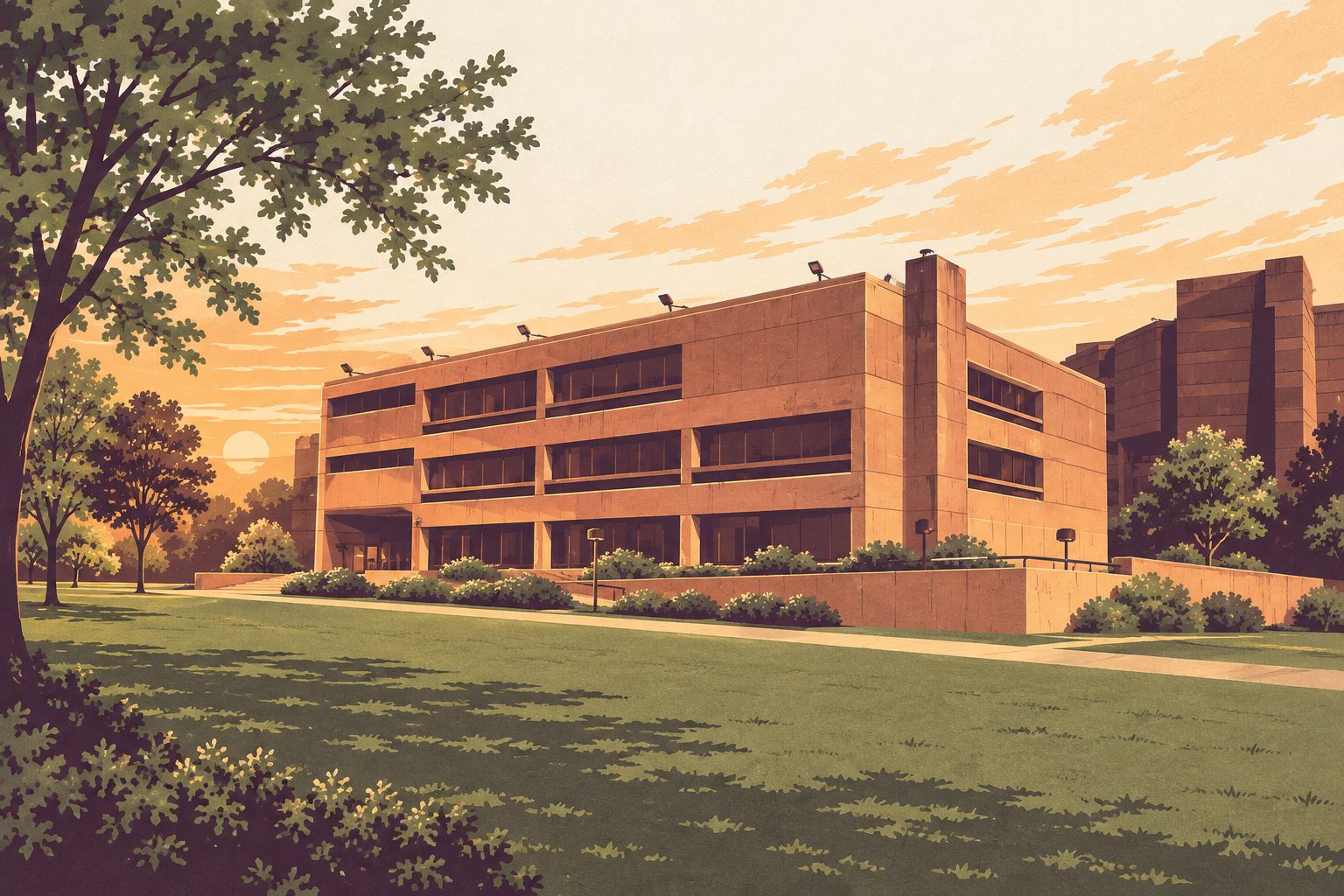
The University of the District of Columbia sits in northwest Washington, on a 23 acre campus in the North Cleveland Park neighborhood at Connecticut Avenue and Van Ness Street. The Red Line Metro station that carries the university's name, Van Ness-UDC, is nearby at the same 4200 Connecticut Avenue address. UDC calls itself the only public university in the nation's capital and the only urban land-grant university in the United States, and it is a historically Black institution.
Federal data counts 3,351 undergraduates and 592 graduate students, and about 56% of students are Black. Those students are spread across engineering, business, nursing, a law school and a community college. It also helps to know that UDC is mostly a commuter school: it opened its first student housing in August 2010, by leasing an apartment building across the street.
The school is really two schools under one name: a four-year university at Van Ness and a community college based at the Lamond-Riggs campus in Northeast Washington. The outcomes are modest and you should hear them plainly. Federal figures show a 30% graduation rate and 68% of first-year students returning for a second year, and 36% of students receive Pell Grants. Take those numbers to a visit and ask what support exists to help students finish.
History
The story starts in 1851, when a teacher named Myrtilla Miner opened a school for free Black girls in Washington, a city where slavery was still legal. She began with six students. A local newspaper article describes her working through mobs and attempted arson, and it credits a donation from the royalties of Uncle Tom's Cabin with helping her buy land. In 1879 the Miner school joined the District's public school system. Lucy E. Moten ran it as principal from 1883 to 1920.
A separate school for white girls, the Washington Normal School, had opened in 1873 and later became Wilson Teachers College. In 1929 the teacher-training schools became four-year colleges, and in 1955, after the Supreme Court's school desegregation ruling, the two merged into the District of Columbia Teachers College.
Two more institutions arrived in 1966, when an act of Congress created Federal City College and the Washington Technical Institute. Each was given land-grant status and an endowment of $7.24 million in place of actual land. Congress approved a merger in 1975, and on August 1, 1977, the three schools were formally consolidated as the University of the District of Columbia, with Lisle C. Carter as its first president. The Washington Technical Institute had already been using part of the original Van Ness campus of the National Bureau of Standards on Van Ness Street.
Two later steps shaped the school you would attend. In 1996 the District's law school, formerly the Antioch School of Law, merged with UDC and became the David A. Clarke School of Law. In 2009 the Community College was created as its own unit.
One alumna shows how long the line runs. Euphemia Haynes, who earned a doctorate in mathematics from The Catholic University of America in 1943, is described by Wikipedia as the first African American woman to earn a mathematics Ph.D. She taught in Washington's public schools for decades and, at the university, built a division to train Black teachers.
Academics
UDC's programs sit in a college of arts and sciences, a land-grant college, a school of business and public administration, an engineering school, the law school and the community college. The School of Engineering and Applied Sciences offers eight bachelor's degrees: biomedical, civil, computer, electrical and mechanical engineering, plus computer science, cybersecurity and information technology. It also offers a doctorate in computer science and engineering. In September 2026 the university announced a $4.99 million renewal of its National Science Foundation award for the Center for Nanotechnology Research and Education, which sits in the engineering school, and a separate $9.9 million federal award to build research in quantum information device manufacturing.
The College of Agriculture, Urban Sustainability and Environmental Sciences carries the land-grant mission in a city setting. Its bachelor's programs include architecture, community health sciences, nursing for registered nurses finishing a bachelor's, nutrition and dietetics, and urban sustainability. Its land-grant centers include one for urban resilience, one for urban agriculture and gardening education, and one for nutrition, diet and health, and the college runs the East Capitol Urban Farm, which it describes as the largest urban farm in the District.
What students actually finish tells its own story. Among bachelor's degrees, business administration leads with 60 awards, followed by biology with 21, then mechanical engineering and human development and family studies at 20 each, and computer science, psychology and political science at 19 each. Accounting adds 15. Among associate degrees, education leads with 91 awards and general studies follows with 58.
The David A. Clarke School of Law awarded 48 first professional degrees in the federal counts. The university reports that U.S. News and World Report ranked it second in the nation for the share of graduates entering public interest careers and nineteenth for clinical training in 2025. Its clinical requirement is among the largest in the country, with supervised work in areas such as housing, immigration and juvenile justice.
The Community College lists more than 25 degree programs plus certificates, from nursing and respiratory therapy to mortuary science and aviation maintenance. The aviation maintenance classes are held in a hangar at Reagan National Airport.
Campus life
Housing is apartment style. UDC manages two apartment communities across the street from campus, AVA Van Ness and 3003 Van Ness. Apartments are fully furnished with one or two bedrooms and hold up to four students, with a kitchen, a private patio or balcony, a fitness center and a 24-hour front desk. Students apply through the housing office and pay a $150 non-refundable deposit to hold a space, and the housing page says students arrange their own internet service.
The Office of Student Life lists more than 50 clubs and organizations. There are separate student governments for the Community College, undergraduates and graduate students. Greek life centers on the National Pan-Hellenic Council: UDC recognizes chapters of all nine Divine Nine fraternities and sororities. To join one, a student must be enrolled at the Van Ness campus and hold at least a 2.5 grade point average.
The Firebirds compete in NCAA Division II in the East Coast Conference, which UDC joined in the 2011 to 2012 academic year. Wikipedia lists nine varsity teams: basketball, lacrosse, tennis and soccer for men, and basketball, lacrosse, tennis, cross country and track and field for women. The university once had football but dropped it. The men's basketball team won the 1982 NCAA Division II championship under coach Wil Jones and finished as runner-up in 1983. The mascot is Felix the Firebird.
Music has a home here too: the Jazz Studies program produces the Calvin Jones Big Band Jazz Festival, described below.
Traditions
Homecoming is the big week. In 2024 it ran November 9 through 16 under the theme A Firebird Reunion, and the university's own recap gives a sense of the mix: a royal coronation and ball, a silent headphone brunch, a worship service at Nineteenth Street Baptist Church, a fashion show at Lamond-Riggs, a career fair with more than 60 employers, a Firebird Festival and men's and women's basketball games with a tailgate, which the university called a return home to the Nest. One alumnus told the Washington Informer that homecoming is the rallying cry for Firebirds. Dates and events change every year, so check the current schedule on udc.edu.
The Calvin Jones Big Band Jazz Festival is the other tradition worth knowing. It began in 1987 as part of a citywide tribute to Duke Ellington and is produced by UDC's Jazz Studies program with the Felix E. Grant Jazz Archives. Ensembles from UDC, Howard University and the University of Maryland play, and it usually falls on the last Monday evening in April. The 2027 festival is set for Monday, April 26, 2027, in the university's Theater of the Arts. The festival carries the name of Calvin Jones, who directed the UDC jazz program.
The university also describes itself as the nation's second oldest HBCU, tracing its start to Myrtilla Miner's school in 1851. That is the university's own claim, and it is used in its homecoming messaging.
Getting in
There are two doors in, and which one you use depends on your record. The Community College takes anyone with a high school diploma, a GED or an equivalent from an accredited school. The four-year bachelor's programs at Van Ness have stated standards: either a 2.5 high school GPA with an 890 on the SAT or a 16 on the ACT, or a 2.0 GPA with a 1030 SAT or a 19 ACT. The university's standards page adds that starting in fall 2020 it became temporarily test optional, so check the page for what applies to your year.
Students who do not meet the four-year standards can usually still be admitted to the Community College and later move up once they meet the academic requirements. Transfer students can enter the four-year school with at least 24 college credits and a 2.0 GPA, or with fewer than 24 credits and a 2.5 high school GPA.
Applying is done online. UDC asks for official high school transcripts, and official transcripts from any colleges attended. As of the page read in September 2026, the undergraduate application fee was waived. Read the current requirements and deadlines on the admissions pages before you plan around any of this.
Paying for it
UDC steers students to a scholarship matching tool called Scholarship Universe, where admitted students log in with their university credentials, see internal and outside scholarships they may fit, and apply from one place. The public scholarship page does not list individual awards or amounts, so ask the financial aid office what is open to you.
For federal aid, the FAFSA opens each October 1 and UDC's school code is 007015. There is a net price calculator on the financial aid site, and it is the right first stop for a family trying to see a real number.
There is also emergency help. The Firebird Retention Grant is a one-time grant of up to $1,250 for full-time undergraduates who have finished at least 30 credit hours at UDC and hit an unexpected hardship. International students cannot use it. UDC also offers a course materials program that charges $34 per credit hour so books and materials are ready by the first day of class. The application fee waiver is open to current D.C. high school students with financial hardship, and to Community College graduates automatically.
Visiting
UDC runs in-person campus visits, and its tours page also carries a virtual tour you can take from home first. Individual visitors can book on Mondays and Fridays at 10:00 a.m. or 1:00 p.m., and groups of up to 50 students on Tuesdays and Wednesdays at the same times. Groups need one chaperone for every 15 students and must be approved before they are confirmed. You reserve through the university's events portal by choosing the Undergraduate category.
Each visit includes a 15 minute question and answer session with an admission counselor and a 60 minute walking tour led by student ambassadors, with lunch options available. Confirm the schedule when you book, because the university can change or cancel visits.
Bring questions about the outcomes numbers and about work schedules. On the walk, look at the E.B. Henderson Sports Complex plaza, where the 2024 homecoming crowd gathered, and ask about the apartment communities across the street. If your family has an extra day, ask about seeing the Community College at Lamond-Riggs.
Who it fits
UDC suits a student who wants a city university with access to the capital. The school describes itself as the most affordable college education in Washington, so it is worth a look from any family watching cost. If you are drawn to engineering, computer science, nursing, business or urban sustainability, the list of programs is wide. If you think you may want law school, the on-campus law school and its clinical emphasis are worth a serious look.
It also suits a student who wants a second path. The Community College door lets you start with an associate degree and move up, and the school says students turned away from the four-year programs can enter that way.
It may not suit a student who wants a traditional residential campus with a big football weekend. UDC has no football team, campus housing is apartments across the street rather than dorm halls, and it is still mostly a commuter school. It may also be harder for a student who needs a lot of built-in structure, because the federal graduation rate is 30%, so many students do not finish. Ask what support the school offers. If you are coming from the West Coast, know that Howard University is 3 miles away, and Bowie State is 17, if you want to compare HBCUs in one trip.
Getting there from the West Coast
The closest major commercial airport is Ronald Reagan Washington National (DCA). Wikipedia puts it about five miles from Washington, and a trip planner lists it at roughly 9 miles from the campus station. By Metro, that trip takes about 29 minutes with one transfer: ride the Red Line from Van Ness-UDC to Gallery Place, then switch to a Yellow Line train to the airport station, which is served by the Yellow and Blue Lines. A taxi for the same trip is listed at about 15 minutes.
The Van Ness-UDC station is at 4200 Connecticut Avenue, the same address as the campus, so from the airport you can reach the school without a car. If you rent a car, visitors can park in the Van Ness campus garage at the daily rate, driving in from Van Ness Street only.
Every fact on this page, with its source (41)
- UDC calls itself the only public university in the nation's capital and the only urban land-grant university in the United States; its homepage title describes it as an HBCU and land-grant university, and it lists schools and colleges including Arts and Sciences, CAUSES, Business and Public Administration, Engineering and Applied Sciences, the Community College and the David A. Clarke School of Law. University of the District of Columbia
- Wikipedia lists the campus at 23 acres; the Van Ness campus is in North Cleveland Park at Connecticut Avenue and Van Ness Street; primarily a commuter school, UDC opened its first residential accommodations in August 2010 by leasing an apartment building across the street. Wikipedia, University of the District of Columbia
- The Van Ness-UDC station is on the Red Line at 4200 Connecticut Avenue NW, the same street address UDC gives for its Van Ness campus. Wikipedia, Van Ness-UDC station
- The UDC Community College's contact address is the Lamond-Riggs Campus, 5171 South Dakota Ave. NE; it lists more than 25 degree programs plus certificates, including nursing, respiratory therapy, mortuary science and aviation maintenance technology. University of the District of Columbia Community College
- Myrtilla Miner started her school for free Black girls in Washington in 1851, in a city the article calls the citadel of slavery, with six students; she braved mobs and arson attempts, and donations including $1,000 from Uncle Tom's Cabin royalties helped buy land. Lucy E. Moten was principal of Miner Normal School from 1883 to 1920; Congress made the Black and white normal schools four-year teachers colleges in 1929; the Federal City College and Washington Technical Institute were created by a 1966 Act of Congress. Forest Hills Connection
- Miner's school became part of the D.C. public school system in 1879; the Washington Normal School for white girls was established in 1873 and renamed Wilson Teacher's College; in 1955 following desegregation the schools merged into the District of Columbia Teachers College; in 1977 the Washington Technical Institute, Federal City College and D.C. Teachers College were unified as UDC; in 1996 the D.C. School of Law, formerly the Antioch School of Law, merged with UDC and formed the David A. Clarke School of Law; the Community College of D.C. was created in 2009. PR Newswire, UDC Celebrates 160 Years
- The District of Columbia School Reform Act of November 7, 1966 established two institutions, each with land-grant status and a $7.24 million endowment in lieu of a land grant; a merger was approved in 1975; on August 1, 1977 the three institutions were formally consolidated as UDC with Lisle C. Carter as first president; the Council merged the D.C. School of Law with UDC in 1996; the Community College was established starting with the 2009 to 2010 academic year. Wikipedia, University of the District of Columbia
- The Washington Technical Institute occupied part of the original Van Ness campus of the National Bureau of Standards; UDC's 1975 to 1976 annual report put the former WTI campus on a 21 acre site. Forest Hills Connection
- Euphemia Haynes earned a doctorate from The Catholic University of America in 1943, taught in Washington's public schools for 47 years, and at UDC established and chaired the Division of Mathematics and Business Education, a department dedicated to training African American teachers. Wikipedia, Euphemia Haynes
- Wikipedia's UDC article lists Euphemia Haynes as the first African-American woman earning a PhD in mathematics, in 1943. Wikipedia, University of the District of Columbia
- The School of Engineering and Applied Sciences offers 8 bachelor's degrees (biomedical, civil, computer, electrical and mechanical engineering, computer science, cybersecurity, information technology) and a doctorate in Computer Science and Engineering. UDC School of Engineering and Applied Sciences
- The College of Agriculture, Urban Sustainability and Environmental Sciences offers bachelor's degrees in Architecture, Community Health Sciences, Nursing (RN to BSN), Nutrition and Dietetics, and Urban Sustainability, and lists land-grant centers for urban resilience, urban agriculture and gardening education, and nutrition, diet and health; East Capitol Urban Farm, built in 2015 with DCBIA, is described as the largest urban farm in the district. UDC CAUSES
- The land-grant centers are the Center for Urban Resilience, Innovation and Infrastructure, the Center for Urban Agriculture and Gardening Education (which operates the East Capitol Urban Farm), and the Center for Nutrition, Diet and Health. UDC Land-Grant Centers
- U.S. News and World Report ranked UDC's David A. Clarke School of Law second nationally for the percentage of graduates entering public interest careers and 19th for clinical training, released April 8, 2025; it has one of the largest clinical requirements in the country, covering housing, immigration, juvenile justice and legislative advocacy. UDC News, April 2025
- Community College aviation maintenance technology classes are held at Ronald Reagan Washington National Airport, Hangar #2, alongside respiratory therapy and mortuary science. Community College Daily, February 25, 2023
- UDC manages two apartment communities across the street from campus, AVA Van Ness and 3003 Van Ness, with fully furnished 1 and 2 bedroom apartments holding 1 to 4 students, a private patio or balcony, a 24 hour concierge and a 24 hour fitness center. UDC Housing and Residence Life
- Housing applicants pay a non-refundable deposit of $150 to secure space, and students arrange their own cable and internet service. UDC Housing and Residence Life
- The Office of Student Life lists 50+ clubs and organizations and three governance bodies: Community College, Undergraduate and Graduate student government associations. UDC Student Life
- UDC recognizes 9 Divine Nine chapters under the National Pan-Hellenic Council; members must be enrolled at the Van Ness campus and hold a minimum cumulative 2.5 grade point average. UDC Greek Life
- The Firebirds compete in NCAA Division II in the East Coast Conference in nine sports: 4 men's (basketball, lacrosse, tennis, soccer) and 5 women's (basketball, lacrosse, tennis, cross country, track and field); the university sponsored football in the past but discontinued it; the men's basketball team won the 1982 NCAA Division II tournament under Coach Wil Jones and were runners-up in 1983. Wikipedia, District of Columbia Firebirds
- UDC joined the East Coast Conference in the 2011 to 2012 academic year; the conference is NCAA Division II and was founded in 1989 as the New York Collegiate Athletic Conference. Wikipedia, East Coast Conference
- UDC's mascot is Felix the Firebird. Wikipedia, University of the District of Columbia
- UDC Homecoming 2024 ran November 9 to 16, 2024, themed A Firebird Reunion, with a royal coronation and ball, a silent headphone brunch, homecoming worship at Nineteenth Street Baptist Church, a career fair with over 60 employers, a fashion show at the Lamond-Riggs Campus, a barbecue and Firebird Festival, and men's and women's basketball games with a tailgate for those who returned home to the Nest; UDC described itself as the nation's second-oldest HBCU. UDC 2024 Homecoming Recap
- The Washington Informer's coverage of UDC's 2024 homecoming, November 20, 2024, describes gatherings at the E.B. Henderson Sports Complex Plaza and quotes alumnus Selvon Waldron, class of 2008, calling homecoming the Firebirds' rallying cry. Washington Informer, November 2024
- Wikipedia says the Calvin Jones Big Band Jazz Festival is usually held the last Monday evening in April and was renamed in 2004 in memory of Calvin Jones, director of UDC's Jazz Studies program. Wikipedia, Calvin Jones Big Band Jazz Festival
- UDC's admissions standards page says the Community College has open admission for anyone with a high school diploma, GED or equivalent; bachelor's applicants need a 2.5 high school GPA and an 890 SAT or 16 ACT, or a 2.0 GPA and a 1030 SAT or 19 ACT; effective Fall of 2020 the university is temporarily SAT/ACT test optional; transfers need 24 or more credits with a 2.0 GPA, or under 24 credits with a 2.5 high school GPA; students denied Flagship admission may be admitted to the Community College and transition later. UDC Admissions Standards
- UDC requires official high school transcripts and official college transcripts from all previously attended institutions; as read in September 2026 the undergraduate application fee is waived, and fee waivers apply to current D.C. high school students with financial hardship and automatically to UDC Community College graduates. UDC Application Requirements
- Scholarship Universe is an online scholarship matching tool for admitted and enrolled UDC students to apply to internal and external scholarships from one portal; the page does not list individual scholarships with amounts. UDC Scholarships
- The FAFSA is available each year starting October 1 and UDC's school code is 007015; UDC's Follett ACCESS Program charges $34 per credit hour for course materials by the first day of classes; a net price calculator is on the financial aid site. UDC Financial Aid
- The Firebird Retention Grant is a one-time grant of up to $1,250 for full-time degree-seeking undergraduates who have completed 30+ credit hours at UDC and are enrolled in at least 12 semester hours; international students are ineligible. UDC Firebird Retention Grants
- UDC's tours page includes a virtual tour; individual visits run Monday and Friday at 10:00 a.m. and 1:00 p.m.; group visits for up to 50 students run Tuesday and Wednesday at 10:00 a.m. and 1:00 p.m. with one chaperone per 15 students; visits include a 15 minute question and answer session with an admission counselor and a 60 minute walking tour led by student hosts, with lunch options; registration links go to the events portal in the Undergraduate category; group requests are manually reviewed and UDC may cancel group visits. UDC Campus Tours
- Reagan National Airport is five miles from Washington, D.C. Wikipedia, Ronald Reagan Washington National Airport
- Rome2rio lists Van Ness-UDC Station to Reagan Washington Airport (DCA) at 9 miles and about 29 minutes by subway including transfers: Red Line to Gallery Place, then the Yellow Line to the airport; a taxi takes about 15 minutes. Rome2rio
- Guests and visitors may use the Van Ness Campus Garage at the daily parking rates, and must drive into the garage from Van Ness St. only. UDC Guest Visitor Parking
- The Van Ness-UDC station is on the WMATA R Line (Red Line) and its name refers to the University of the District of Columbia. WMATA
- UDC's admissions page describes the school as the most affordable college education in Washington, D.C. UDC Admissions
- The Calvin Jones BIG BAND Jazz Festival began in 1987 as part of a citywide tribute to Duke Ellington, is produced by UDC's Jazz Studies Program and the Felix E. Grant Jazz Archives, features the UDC, Howard University and University of Maryland jazz ensembles, and the 2027 festival is set for Monday, April 26, 2027, at UDC's University Auditorium Theater of the Arts. Calvin Jones BIG BAND Jazz Festival
- The Ronald Reagan Washington National Airport Metro station is served by the Blue and Yellow Lines. Wikipedia, Ronald Reagan Washington National Airport station
- UDC announced on September 11, 2026 a $4.99 million renewal of its NSF-CREST award supporting the Center for Nanotechnology Research and Education in the School of Engineering and Applied Sciences, from August 2026 through July 2031. UDC News, September 2026
- UDC announced on September 16, 2026 a $9.9 million competitive federal award to expand research capacity in chemistry-enabled quantum information device manufacturing. UDC News, September 2026
- UDC's admissions standards page says applicants who do not qualify for the Flagship will still be admitted to the Community College if possible. UDC Admissions Standards